
New Fire Safety Guidance for Holiday Caravans: What Owners and Holiday Park Operators Need to Know
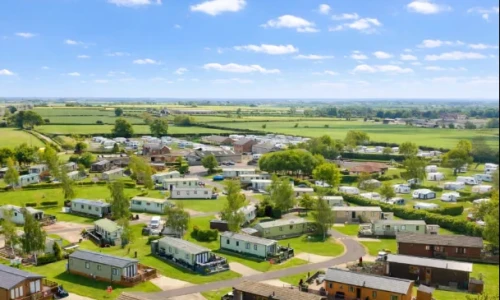
New fire safety guidance has been published for holiday caravan accommodation, providing clearer and more practical advice for caravan owners, holiday park operators and others responsible for the safety of paying guests.
The new guide, Making Your Holiday Caravan Park Accommodation Safe from Fire, has been published by the Resort Leisure Safety Group and was drafted by C.S. Todd & Associates Ltd following engagement with key stakeholders including the National Fire Chiefs Council (NFCC), Scottish Fire and Rescue Service and the Scottish Government.
The Fire Industry Association announced the publication on 1 October 2026, highlighting the particular fire safety challenges associated with holiday caravan accommodation, including sleeping guests who may be unfamiliar with their surroundings.
For holiday caravan owners and park operators, the guidance provides an important new reference point for understanding and managing their fire safety responsibilities.
Who does the new guidance apply to?
The guidance is primarily intended for traditionally designed holiday caravans used for short-term, self-catering holiday accommodation, where guests are paying to stay.
This includes:
-
caravans owned and let by a holiday park operator;
-
privately owned caravans that are sub-let through the park operator; and
-
privately owned caravans let directly by their owner or through an agent.
The guidance is intended for relatively simple, single-level caravan accommodation with no more than 10 sleeping occupants. It does not apply to touring caravans, motorhomes or tents, nor does it apply to privately owned caravans that are not let to paying guests. Fixed buildings, some lodges, yurts and glamping accommodation also fall outside its scope.
Importantly, the guide deals with the individual caravan accommodation and associated decking. It does not replace the need to consider fire safety across the wider holiday park or within other buildings on the site.
A Fire Risk Assessment is still fundamental
One of the most important messages within the guidance is that fire safety measures should be based upon a suitable fire risk assessment.
In England and Wales, holiday caravans let to paying guests fall within the scope of the Regulatory Reform (Fire Safety) Order 2005, while similar duties apply in Scotland under the Fire (Scotland) Act 2005.
The guidance is not intended to be applied prescriptively in every caravan. Instead, it provides recommendations and practical examples which can assist dutyholders in complying with fire safety legislation. The exact precautions required should be determined through the fire risk assessment.
This is an important distinction. Fire safety is rarely about simply working through a checklist. The age, design, layout, occupancy and existing fire precautions within the accommodation all need to be considered when deciding whether the arrangements are suitable.
Can one Fire Risk Assessment cover multiple caravans?
Potentially, yes.
The guidance recognises the practical realities of operating holiday parks containing large numbers of similar units. Where caravans are under the same management and are sufficiently similar in their design and fire safety arrangements, a generic Fire Risk Assessment may be capable of covering multiple caravans. However, this should be supported by adequate routine checks for each individual caravan.
Where caravans differ materially – for example in their layout, number of bedrooms, escape windows or fire detection arrangements – separate assessments or additional generic assessments may be necessary.
This makes correctly identifying and grouping different caravan types an important part of the assessment process.
What should owners and operators be looking at?
The new guidance covers a broad range of fire safety considerations, including electrical installations and appliances, gas safety, cooking, heating appliances, smoking, candles, barbecues, housekeeping and combustible storage.
It also provides detailed recommendations covering means of escape, escape windows, fire detection, firefighting equipment and the information provided to guests.
One particularly important area is fire detection and warning.
At least one smoke alarm must be provided, but the appropriate coverage will depend on the caravan's layout. The guidance recommends optical or multi-sensor smoke alarms and states that smoke and heat alarms should be interlinked so that activation of one device causes all alarms to sound. Mains-powered alarms with standby battery supplies are preferred, particularly in newer caravans.
The guidance also recognises the importance of alternative escape routes. Living areas and bedrooms should generally have an alternative means of escape to the main entrance, normally through a suitable escape window, and these arrangements should remain accessible and readily operable.
Fire safety isn't just about the equipment
Effective fire safety management is equally important. The guidance recommends routine checks to ensure fire precautions remain effective. In particular, an individual checklist should support the Fire Risk Assessment for each caravan, with checks undertaken at each changeover of occupants or monthly, whichever comes first, while the caravan is in use.
These checks include ensuring escape doors and windows can be opened, testing smoke and heat alarms including their interconnection and checking that firefighting equipment remains present and undamaged.
Guests should also be provided with appropriate fire safety information, including what to do in the event of fire, the alternative means of escape from their caravan and relevant park rules concerning matters such as smoking, barbecues and candles.
These relatively straightforward management arrangements can make a significant difference, particularly because guests may have little or no familiarity with the caravan when they first arrive.
What should holiday park operators do now?
The publication of the guidance provides a good opportunity for operators and owners to review their existing arrangements.
Existing Fire Risk Assessments should be checked to ensure they adequately consider the individual caravan accommodation and reflect the new sector-specific guidance. Operators should also consider whether different caravan types have been appropriately identified, whether existing fire detection and means of escape remain suitable, and whether effective changeover inspection and record-keeping arrangements are in place.
The guidance suggests that Fire Risk Assessments should typically be reviewed annually and whenever significant changes occur or there is reason to believe an existing assessment may no longer be valid.
For older caravans in particular, the guidance makes an important point: age alone is not justification for occupants being exposed to a significantly greater level of fire risk. Where existing precautions differ from current recommendations, the Fire Risk Assessment should consider whether improvements are necessary, while also taking account of reasonable practicability and proportionality.
Need support with your Holiday Caravan Fire Risk Assessment?
Whether you operate an entire holiday park, manage a portfolio of holiday accommodation or privately own a caravan that you let to paying guests, it is important that your Fire Risk Assessment is suitable for the accommodation and reflects the latest available guidance.
Where you are not confident in carrying out the assessment yourself, the new guidance recommends engaging a competent fire risk assessor with appropriate experience. It also makes clear that those appointing an assessor should take reasonable steps to verify their competence.
Safe I.S. can provide professional Fire Risk Assessment support to holiday caravan owners and holiday park operators, helping you understand your responsibilities, assess your existing fire precautions and identify proportionate improvements where required.
If you own, let or manage holiday caravan accommodation and would like support reviewing your current Fire Risk Assessment arrangements against the new guidance, get in touch with our team to discuss how we can help.
Latest News
- Jack Springford Seeks Re-election to the FIA Fire Risk Assessment Council
- New Fire Safety Guidance for Holiday Caravans: What Owners and Holiday Park Operators Need to Know
- Raising the Standard: Safe I.S. Achieves Bluesky Certification for Fire Door Inspection
- More Than a Match: Celebrating the Real Heroes at Goals4GOSH
- Who Is Competent to Carry Out a Fire Risk Assessment?
- Safe I.S. Ltd Awarded BAFE SP205 Life Safety Fire Risk Assessment Certification
- Goals4GOSH 2025 Main Event raises over £50,000
- Miles for Meaning: Support Safe I.S. Engineer Oscar Voller in the London Marathon for St Catherine's Hospice
- Safe I.S. Celebrates Re-Accreditation of Fire Warden Training by the IFE
- Christmas 2024 Opening Hours